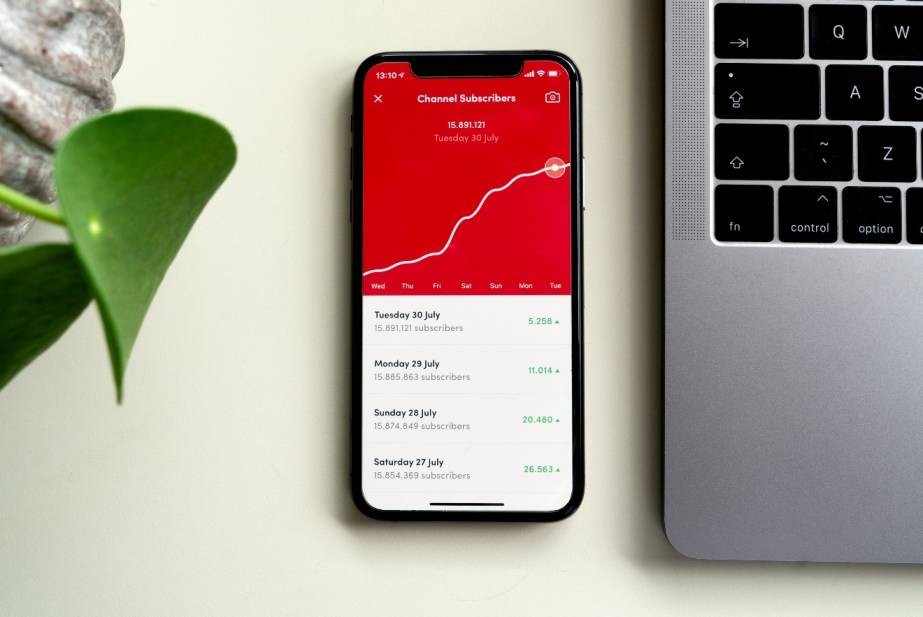
Struggling to grow your YouTube channel? You’re not alone. Plenty of YouTubers find it difficult to build subscribers and views, whether that’s from not understanding how the algorithm actually works or not creating content that resonates with viewers.
This post walks through the common reasons a channel stalls out, along with practical tips to help you get more views and subscribers.
How to Grow a YouTube Channel: Why Your Channel Isn’t Growing

1. You’re Not Posting Regularly Enough
Posting just once a week often isn’t enough to stay on people’s radar, though posting too aggressively can also hurt engagement if quality drops as a result. A few things that help:
- Schedule videos at least a few days in advance, so you’re never rushing to publish.
- Link to other videos on your channel within each upload, so viewers can easily find more of your content.
- Use relevant hashtags to connect with like-minded creators and audiences.
- Understand your audience’s time zone, and publish during the hours they’re actually most active.
- Check who’s engaging with and sharing your content, since this often reveals where your audience is finding you.
- Join relevant online communities (Facebook groups, Reddit threads, Discord servers) where people discuss topics related to your content.
- Use appropriate tags and keywords on each video, researching related terms to understand what’s already resonating with viewers in your niche.
Consistency remains the most important factor here. A predictable schedule, even a modest one, tends to outperform sporadic, unpredictable uploading.
2. You’re Not Posting Engaging Videos
The most reliable way to grow is consistently posting content that engages viewers. This could be a Q&A with your audience, a cooking tutorial, an unboxing video, or anything that feels fresh and relevant to your niche.
Good production quality matters too, viewers are far more likely to return and subscribe when a channel feels polished and consistent. With so much competition online, capturing attention takes real intention behind each video.
If your content doesn’t captivate people now, they won’t come back tomorrow, so it’s worth being honest with yourself about whether each video is actually worth someone’s time.
3. You’re Not Optimizing Your Videos Properly
Tools like TubeBuddy and vidIQ can help optimize your titles, descriptions, and tags for better discoverability, along with tracking what’s working across your channel over time.

It’s worth being clear about something that’s changed significantly here: YouTube annotations, the clickable pop-up boxes that used to appear during videos, were fully removed from the platform back in January 2019.
If you’ve come across older advice suggesting you use annotations (including no-follow annotation links) to point viewers toward other videos, that guidance is outdated and no longer applies, the feature simply doesn’t exist anymore.
Instead, YouTube replaced annotations with two mobile-friendly tools:
- Cards, small clickable prompts that appear in the top-right corner during playback, letting you link to another video, playlist, channel, or an approved external site.
- End screens, which appear in the final 5 to 20 seconds of a video and can promote another video, a playlist, a subscribe button, or an external link, and work well across both mobile and desktop.
Both options are more effective than annotations ever were, since they were specifically designed with mobile viewing in mind, and YouTube’s own data has shown they generate significantly more clicks than annotations did.
What is TubeBuddy or vidIQ actually for? These are browser extensions and apps built to help manage and grow a YouTube channel, offering keyword research, thumbnail testing, SEO scoring, and channel analytics.
They’re worth exploring if you want a more strategic, data-driven approach to growing your channel rather than guessing at what works.
4. You’re Not Creating Video Series
A video series is a set of related videos uploaded to the same channel, connected by a shared theme or storyline. If you were reviewing a book, for example, one video might introduce it while another features an interview with the author.
Series work well because viewers who enjoyed one installment are naturally drawn to watch the next, without needing to search for it separately.
When building a series, make sure each new video clearly connects to what came before, so viewers immediately understand the context. Otherwise, they’ll be confused about what happened in a previous episode, or feel like they’ve missed something important.
5. You Need Patience
Building a loyal subscriber base takes real time. Posting new content regularly, at minimum a couple of times a week, remains one of the most reliable growth drivers.
Engaging with your audience in the comments, and promoting your content across other social platforms, also helps you reach new viewers. Even with consistent daily uploads, it can realistically take several months before you start seeing meaningful traction.
Patience is essential here. A stagnant channel is often less about bad luck and more about insufficient promotion or not yet reaching the right audience.
If your channel feels stuck, it’s worth experimenting with different content formats, tightening your SEO, and engaging with other creators in your niche.
Actively promoting your content across social media and other platforms also matters more than many new creators expect.
A Note on How the Algorithm Has Evolved
It’s worth understanding a couple of shifts in how YouTube’s recommendation system currently works, since this affects what “growth” actually looks like today.
YouTube now weighs viewer satisfaction, measured through post-watch surveys, likes, shares, and return visits, as a significant factor, in some cases outweighing raw watch time alone.
A shorter, satisfying video can outperform a longer one that technically holds attention but leaves viewers less engaged overall.
It’s also worth knowing that YouTube Shorts now runs on a completely separate recommendation system from long-form video, as of late 2025.
Performance in one format doesn’t directly boost the other, so if you’re creating both, it’s worth treating them as distinct growth strategies rather than assuming success in one lifts the other automatically.
Finally, if you’re using AI tools anywhere in your production process, YouTube now requires disclosure of AI-generated or AI-altered content, undisclosed use can result in reduced recommendations or, in more serious cases, removal from search and suggested videos entirely.
Conclusion
There you have it, how to grow a YouTube channel and the common reasons growth stalls out. I hope you found this post valuable.
If you have any questions or suggestions, feel free to leave a comment below, and if you’re already running a channel yourself, share your own experiences on the topic too.